News
Rail industry stakeholders press for South Africa to domesticate the Luxembourg Rail Protocol
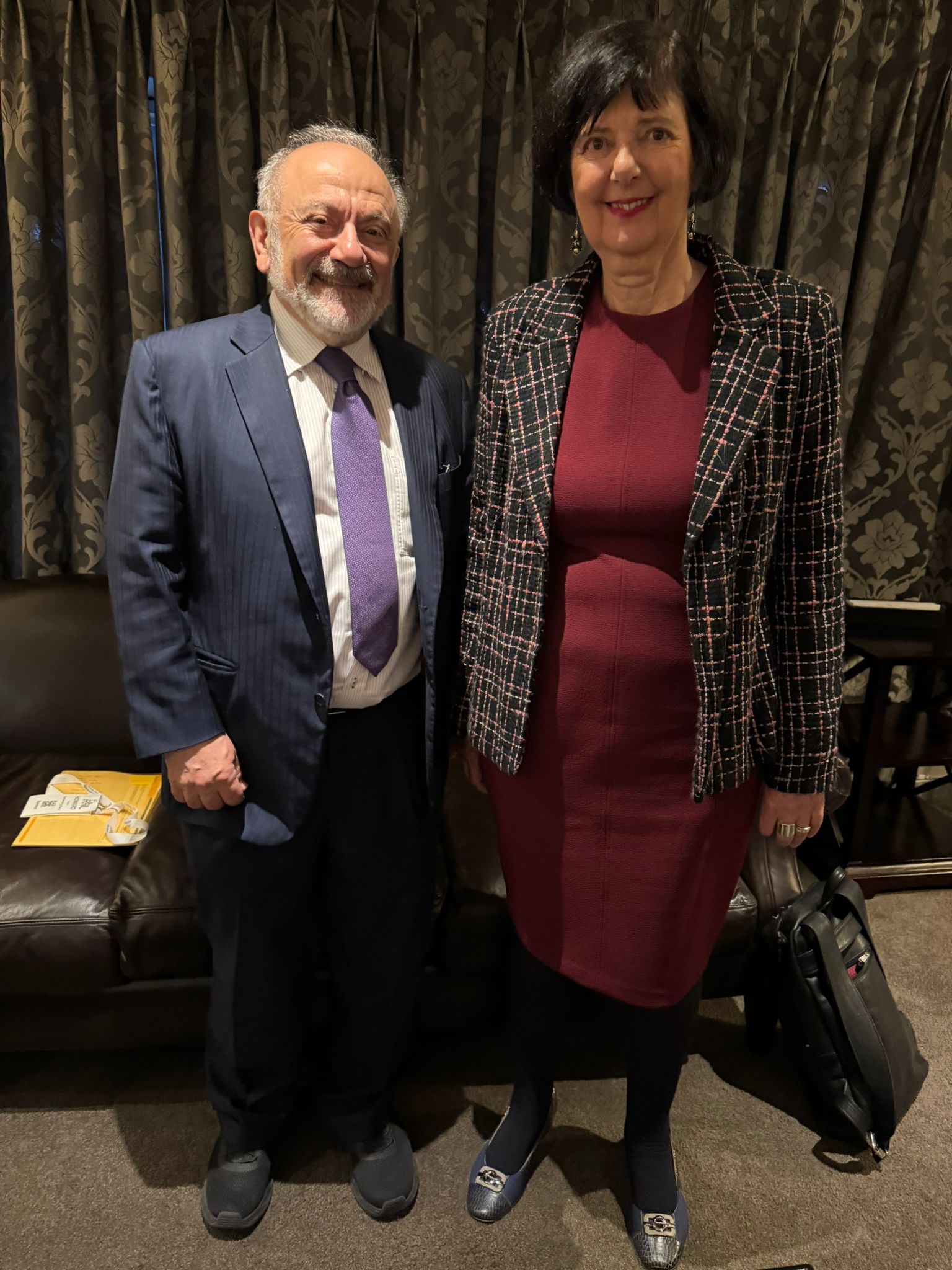
Key representatives of the South African rail and rail finance industries have urged the South African transport minister, the Hon. Barbara Creecy to move forward quickly to implement the Luxembourg Rail Protocol into South African law. In a letter, delivered personally yesterday to Minister Creecy by RWG chair, Howard Rosen, the South African Contact Group of the RWG congratulated the South African government “on its commendable decision to ratify the Luxembourg Rail Protocol” at the end of January, but expressed its serious concern that the Protocol has not yet been implemented into South African law.
The Luxembourg Rail Protocol to the Cape Town Convention is binding on the Republic of South Africa as an international treaty as from 1 May 2025 but the letter points out that legislation implementing the Protocol as a matter of domestic law has yet to pass through Parliament. “This means that the significant benefits to be delivered by the Protocol, both for the private and public sectors, making it easier and cheaper for the private sector to provide finance for railway rolling stock, cannot currently be realised.” The signatories of the letter urged the South African government “to move forward with the necessary legislation at the first possible opportunity”.
“By supporting cheaper private finance for railway rolling stock, the Luxembourg Rail Protocol plays an important role underwriting the government’s rail reform programme” said Mesela Nhlapo, Director Africa, of the Rail Working Group and CEO of the Africa Rail industry Association. “It is critical that the Protocol is incorporated into national law at the earliest opportunity” she continued.
NOTES FOR EDITORS
See the complete letter addressed to Minister Creecy here and the photograph of Howard Rosen’s meeting with the Minister here.
The Luxembourg Rail Protocol to the Cape Town Convention on International Interests in Mobile Equipment is a new global treaty under the auspices of UNIDROIT, the International Institute for the Unification of Private Law. The Protocol will make it much easier and cheaper for the private sector to finance all types of railway rolling stock. It sets up a new system for recognition, priorities and enforcement of creditor and lessor rights, which will be registered in an international registry based in Luxembourg, accessible to everyone over the internet 24/7 and introduces, for the first time a new global unique permanent identification system (URVIS) for rolling stock. The United Nations has now adopted global Model Rules setting out minimum standards for the permanent marking of railway rolling stock with URVIS numbers. The Protocol entered into force in contracting states on 8th March 2024.
The European Union (in respect of its competences). Gabon, Luxembourg, Paraguay, South Africa, Spain, and Sweden have ratified the Protocol. France, Germany, Switzerland, Mozambique, Italy, and the UK have already signed the Protocol and are working towards its adoption. Many other states, including the Democratic Republic of Congo, Kenya, Malta, Eswatini, Namibia, Zimbabwe, Ethiopia and Mauritius, are actively looking at ratification of the Protocol. The Protocol is endorsed by many international rail organisations (including the African Rail Industry Association, OTIF, CIT, UIC, UIP, ERFA, ALLRAIL, UITP, CER and Eurofima) and actively supported by the African Union, the UN Economic Commission for Africa and the UN Economic Commission for Europe.
The Rail Working Group is a Swiss-based not-for-profit association focused on the adoption and implementation of the Luxembourg Rail Protocol. It has about 90 direct members and hundreds of additional rail stakeholders represented indirectly by various industry organisations that belong to, and support, the objectives of the RWG.
For more on the Luxembourg Rail Protocol and the Rail Working Group visit www.railworkinggroup.org.
Further information from the Rail Working Group:
Tel. +41 41 760 28 88
WhatsApp +41 79 340 21 53
Email LinkedIn Africa Contact Europe Contact
ENDS